
R.I.P., Dave Ball
Soft Cell made him famous, The Grid kept him in the charts, but one could argue that his friendship with Marc Almond kept him going longer than he might've otherwise

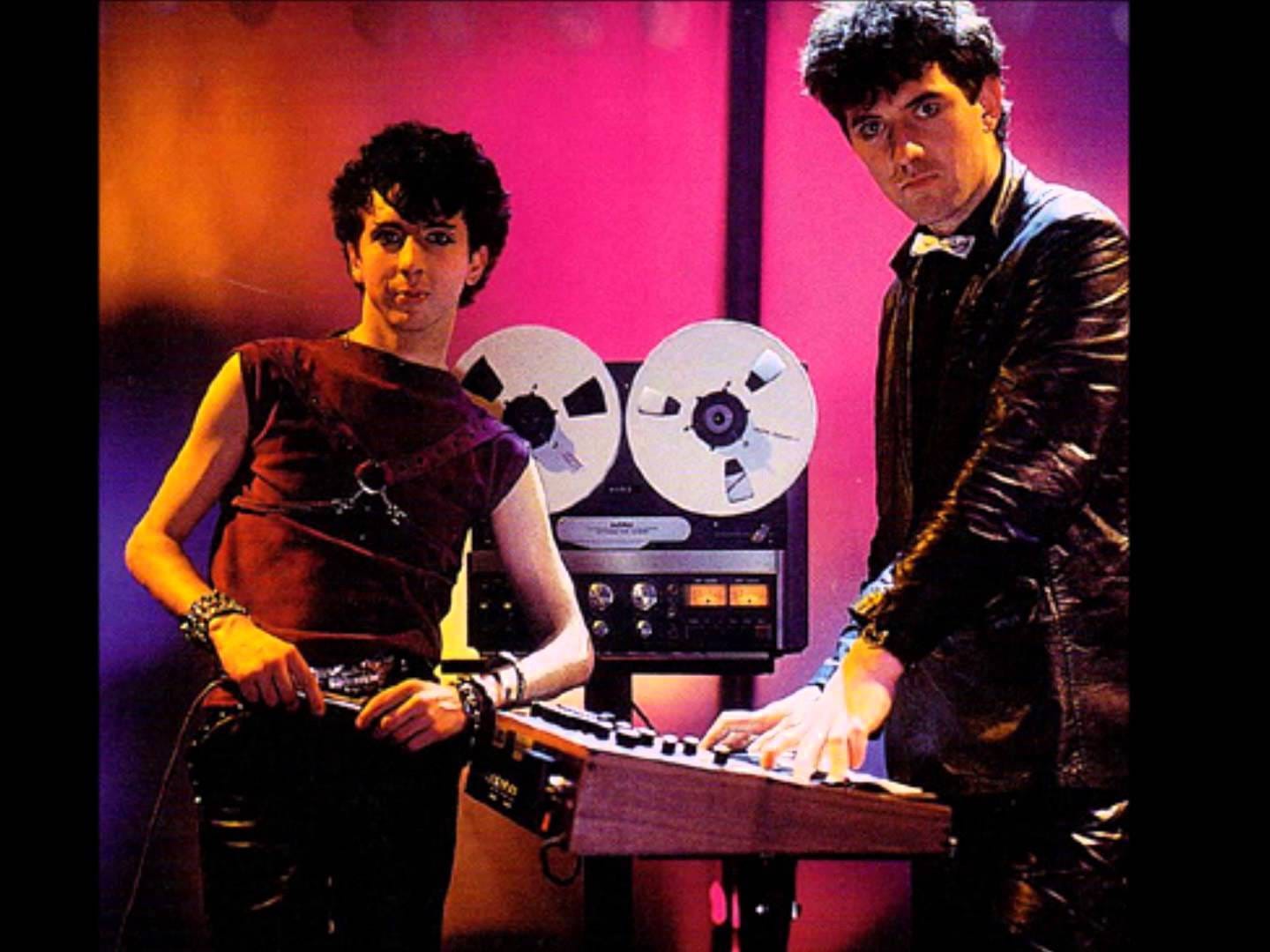
I couldn’t tell you the first time I ever heard Soft Cell, but like most Americans, I can certainly tell you the first song of theirs that I ever heard: “Tainted Love.”
Of course, some would argue that it isn’t their song, since it’s actually a song that was written by Ed Cobb of the Four Preps, who also produced the first recorded version of the track. That version came courtesy of Gloria Jones, who recorded the song in 1964 and released it as the B-side of her 1965 single, “My Bad Boy’s Comin’ Home.”
The single failed to chart, but almost a decade later, Jones’s version of “Tainted Love” became a belated smash on the Northern soul club scene, resulting in Jones re-recording the song in 1976, at which point the song - wait for it - failed to chart again. This was a particularly impressive failure, given that it was produced by her boyfriend at the time, Marc Bolan, which really should’ve given it a high enough profile to at least crack the charts.
Fast-forward another half-decade, however, and “Tainted Love” finally does make its way into the charts, courtesy of Soft Cell, whose slinky synthpop take on the track became the duo’s second single (after “Memorabilia,” which provided with the opportunity to share the heartbreak of having a single fail to chart). The end result: a chart-topping UK single and a top-10 US single. More than its top-10 success, however, it should be mentioned that it ultimately remained on the Billboard Hot 100 for 43 weeks, an unparalleled achievement at the time and one which earned Soft Cell a spot in The Guinness Book of World Records.
So, yes, Soft Cell’s most popular single is one that they didn’t even write, but with the passing of Dave Ball yesterday, it should first and foremost be underlined that it was Ball who was the Northern Soul aficionado that brought the song to Almond’s attention, and it was also Ball who created the new arrangement of the song to match the Soft Cell sound.
But let’s rewind for a moment. Soft Cell first came together in 1978, a year after Almond and Ball had first met as students at Leeds Polytechnic. In 1980, they released their first EP, Mutant Moments, which they were only able to afford to record because Ball’s mum loaned them the £2,000 they needed to do it. They only pressed 2,000 copies of the EP, but it made enough of an impression for them to be signed to Some Bizarre Records
Their debut album, 1981’s Non Stop Erotic Cabaret, found its way to #5 on the UK Albums chart and to #22 on the Billboard 200, and while Soft Cell never had another single beyond “Tainted Love” make it into the US charts, they went on to score four more top-10 hits in the UK: “Bedsitter” (#4), “Say Hello Wave Goodbye” (#3), “Torch” (#2), and “What” (#3). They went on to release two further albums - 1983’s The Art of Falling Apart (#5 in the UK, #84 in the US) and 1984’s This Last Night in Sodom (#12 in UK, failed to chart in the US) - but after the latter LP, the duo decided to go their separate ways and did so on while still remaining on good terms, which is an impressive achievement in and of itself.
After the conclusion of Soft Cell, Ball opted not to continue the solo career he’d begun while he was still a member of the duo with 1983’s In Strict Tempo LP, instead opting to start a short-lived band with his then-wife, Gini Hughes, called Other People, but it only lasted for the release of one single: “Have a Nice Day.” After that, he started another new band, this one called English Boy on the Loveranch, which lasted for two singles: “The Man in Your Life” and “Sex Vigilante,” but then that, too, dissolved.
In 1988, however, Ball found a collaborator that would last him for a significant length of time: Richard Norris, who joined forces with Ball to form The Grid. They released four albums in the 1990s, with the most successful being their third, 1994’s Evolver, which spawned the hit single “Swamp Thing.” After 1995’s Music for Dancing, the duo decided to take a hiatus, one which freed Ball up to do some work on his own, including a rather high-profile gig as the producer and co-writer of Kylie Minogue’s 1997 album, The Impossible Princess.
This hiatus later provided Ball with the opportunity to reteam with Almond which would lead to a reunion tour in 2000, a new song in 2001 (“God Shaped Hole,” recorded for a Some Bizarre compilation album), and a new studio album, Cruelty Without Beauty, in 2002.
The 2000s proved to be a creatively fruitful time for Ball: in addition to a second new Soft Cell album in 2021 (Happiness Not Included, which found them recording a single - “Purple Zone” - with another notable synthpop duo, Pet Shop Boys) and three new albums by The Grid (2008’s Doppleganger, 2018’s One Way Traffic, and 2021’s Leviathan, the latter being a collaboration with Robert Fripp), he formed another new band, Nitewreckage, which released their debut album, Take Your Money and Run, in 2011. In 2020, he even released a memoir: Electronic Boy: My Life In and Out of Soft Cell.
Not long after Happiness Not Included, however, things started to get a bit dire for Ball, health-wise. Per The Guardian, “He sustained numerous fractures in a fall down some stairs in 2022, and subsequently contracted pneumonia and sepsis, spending seven months in hospital including time in an induced coma.” But, by God, Ball rallied. Not only did Soft Cell go on a US tour with Simple Minds this past summer, but Ball and Almond literally only just put the finishing touches on what will now be the final Soft Cell album, Danceteria.
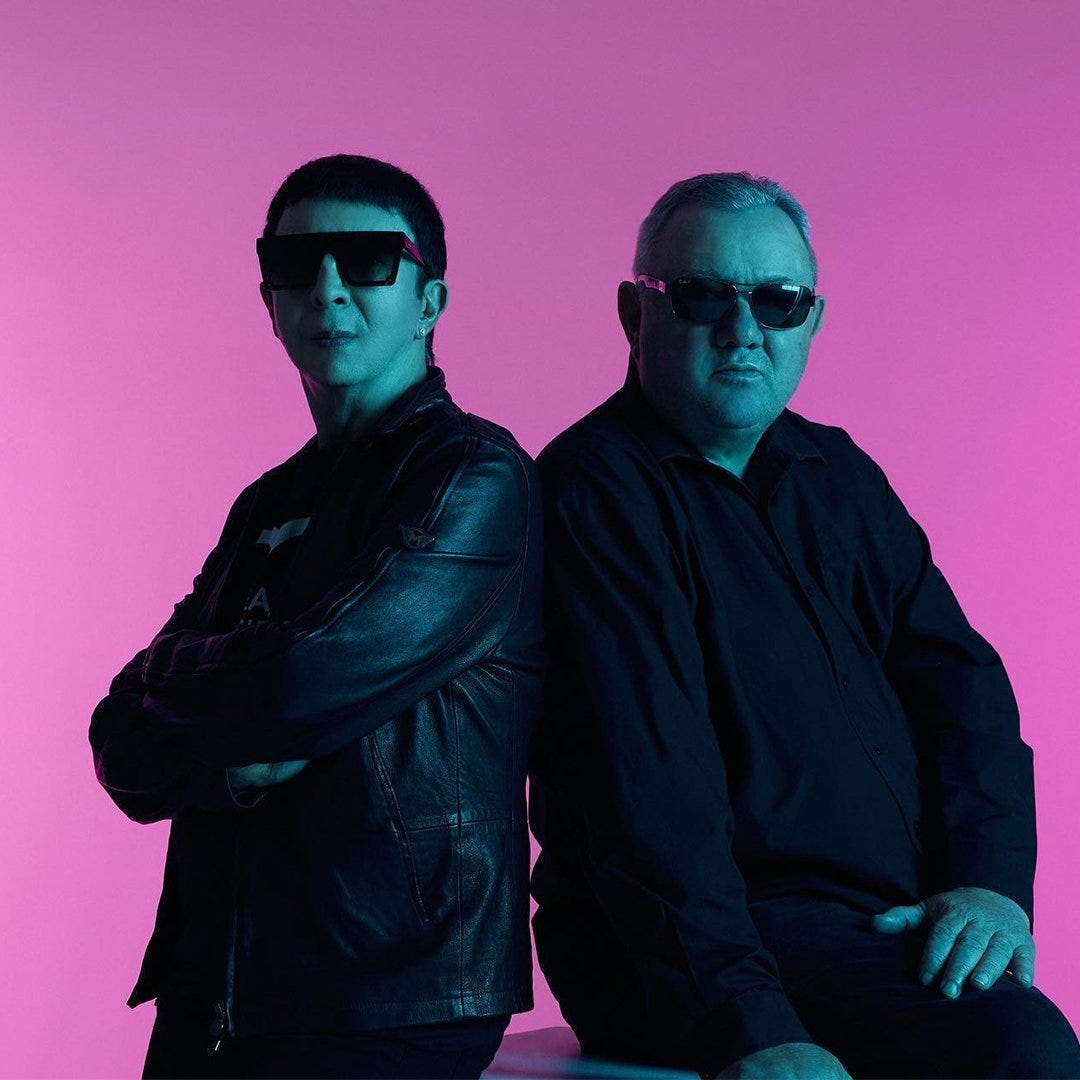
I don’t tend to go out of my way to write full obits for artists on my Substack, but for some reason I felt spurred to do so for Dave Ball. I’m sure it’s at least partially because he and Marc Almond together have literally been a part of the musical landscape for about as long as I’ve been paying attention to the musical landscape, since it wasn’t until the advent of MTV that I really started paying attention.
I remember that the “Tainted Love / Where Did Our Love Go?” 12” single was still a regular seller when I started working at the record store in 1989, and I remember reading the liner notes to Marc Almond’s Tenement Symphony album in 1990 and being pleasantly surprised to see Dave Ball’s name in the songwriting credits. My wife can confirm how excited I was when Soft Cell released that reunion album in 2002, and as I posted on social media only just this morning, I regret that the opening track to that album is so relevant in 2025, but I’d argue it’s one of the best songs Soft Cell ever did.
R.I.P, Mr. Ball. I can’t wait to hear Danceteria, and I’m sorry that it’s the last we’ll ever hear from Soft Cell, but it’s heartwarming to know that you and Marc remained friends and collaborators until the very end.
Fantastic tribute -- much like Chris Lowe, the Dave Ball name might not ring a bell for most pop fans, but their influence on the music and culture that shaped us is monumental. Looking forward to that final album as well.